Origin of the Project
The education of our children and grandchildren.
Education as an engine of change — for individuals and for nations.
Education that awakens leaders capable of inspiring positive transformation in society.
The need to respond to a new model of education, which Newman has been developing since 2015. Education has evolved, and Newman cannot stand still. Today we speak of an education of encounter: encounter with oneself, with others, with the world, and with God.
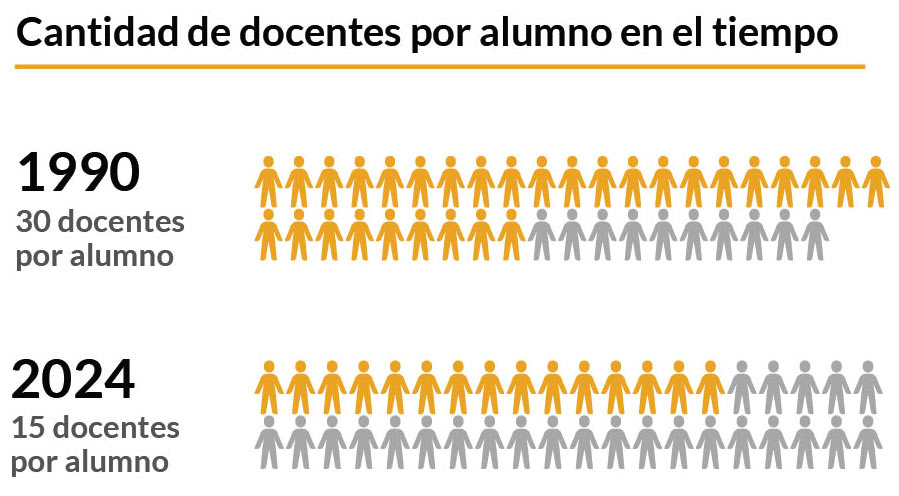
New spaces. New technologies. New approaches to learning and knowledge — with smaller groups, fewer pupils per class to increase interaction with each teacher. Flexible classrooms and innovative learning environments that foster creativity, built on a constant relationship of mutual development between teachers and pupils.
To the changes the world is undergoing — changes from which Newman is not apart. Today Newman embraces the whole family, not only boys. The school opens its doors to girls and to pupils with different abilities, in keeping with the vision of an inclusive education centred on each individual pupil.
Newman's Charter and the research work we have been leading for several years — drawing on international sources, fellow educators, institutions, and our own community of parents, former pupils, key stakeholders, and Christian Brothers.
In an uncertain world, the Charter stands as a guiding light: a document created to anchor the direction of our mission. We press forward in the pursuit of educational excellence and formation in Christian values.
The Education of the Future
Education has changed.
The world has moved away from uniformity — where all pupils are taught in the same way, assessed against the same measures, and given the same content — towards a more personalised approach, further accelerated by the advent of new technologies.
Newman works towards the integral formation of each pupil, grounded in six key principles endorsed by the Holy See, UNESCO, and Newman's own Charter: family and society, leadership, excellence in learning, digital citizenship, inclusion, and environment and sustainability.
Following the precepts of our Charter, teaching and learning at Newman has evolved towards an 'education of encounter', which encompasses four dimensions around each pupil: encounter with oneself, with others, with the world, and with God — always with the figure of Jesus as a model of humanity.
Newman now embraces the whole family: alongside boys, we welcome girls and those who, even with different abilities, teach us more each day.
The school itself becomes an immersive and complete learning experience. The field of action is no longer limited to classrooms and corridors; the school itself stands as a space for innovation, learning, and collaborative work across different groups — beyond age boundaries — always focused on shared interests and projects.
To maximise learning, we have adopted smaller class groups, facilitating deeper interaction between teacher and pupil, and accelerating the exchange of experiences and knowledge.
Newman's Charter and the research work we have been leading for several years — drawing on international sources, fellow educators, institutions, and our own community of parents, former pupils, key stakeholders, and Christian Brothers.
In an uncertain world, the Charter stands as a guiding light: a document created to anchor the direction of our mission. We press forward in the pursuit of educational excellence and formation in Christian values.
The Masterplan as a Response
The new Masterplan proposes architectural responses to the new education: more spaces for small-group work, an updated suite of laboratories (consolidated into a Hub for Art, Science and Technology), and a redistribution of other spaces including the dining hall, sports facilities, and staffrooms, among other requirements.
The project will preserve Newman's main building, which is a symbol of identity for the school and the whole community.
Following the assessment of several projects submitted by alumni architects, the winning practice was Lacroze Miguens Prati, led by Francisco Prati, a former pupil from the class of 1970.
With more than 35 years of experience, Lacroze Miguens Prati has led significant projects in Argentina, Uruguay, Brazil, Mexico, the United States, France, and Japan. The practice is internationally recognised, holding the American Institute of Architects Award as well as Ibero-American and national prizes.
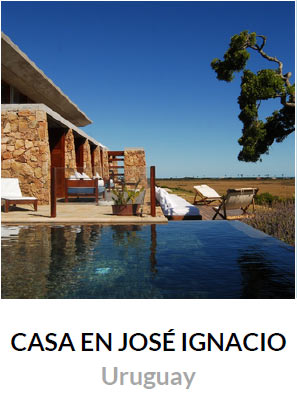
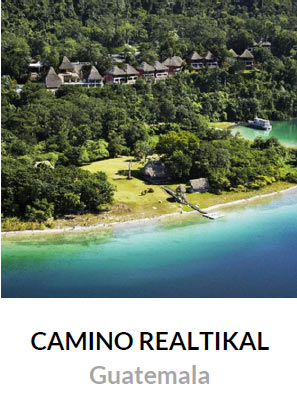
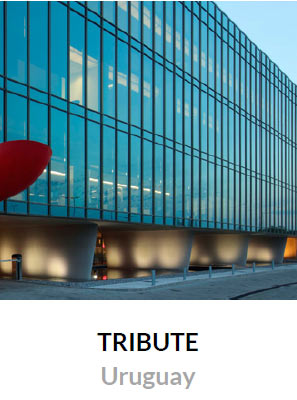
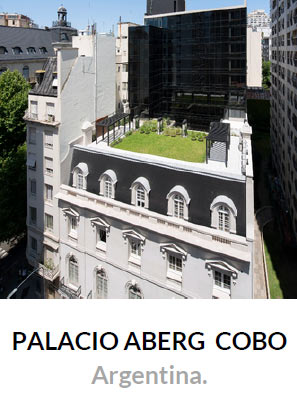
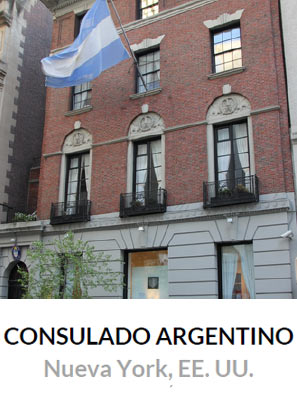
Presentamos a continuación algunas de las obras más destacadas del estudio Lacroze Miguens Prati:

A Call to the Community
Education is a value that transcends any political, economic, or social context.
We are convinced that quality education is most essential in times of crisis. This is precisely what our mission calls for: 'quality education, promoting justice and peace, for an open culture, in an atmosphere of creativity and responsible freedom.
Solidarity is fundamental to our educational vision. It is written into our Charter and into the heart of every pupil. That will not change — on the contrary, we seek to strengthen it through this new project.
Newman collaborates in solidarity with many institutions and communities:
- Instituto Parroquial Santo Domingo Savio
- Fundación El Arca Fundación
- Taller de Costura Santa Clara
- Apoyo Escolar Copacabana
- Instituto Parroquial San Pedro Claver
- Cáritas San Juan Bautista
- Cosechando Alegría y Olimpíadas Mary Rice
- Sin Techo (Personas en situación de calle)
- Hogar Rincón de la Esperanza
- Grupo Misionero Edmund Rice
Because education is the force that drives us — and we all know that education means forming transformative leaders who inspire the positive change society needs. The greatest contribution we can make is to continue improving our educational offer, so as to awaken those new leaders. To open ourselves to the whole family and work together, trusting in the multiplying effect those leaders will have in society.
The full project, across all its phases, amounts to USD 12.190.700.
Yes. For the first phase, the school drew on the reserves of the Christian Brothers' Institute, chaired by Oscar Gosio. USD 3,016,000 was committed from those funds.
