Architecture in the service of education
The Masterplan was shaped through a collaborative process involving architects, teachers, and school leadership — with the aim of supporting learning through the environment itself.
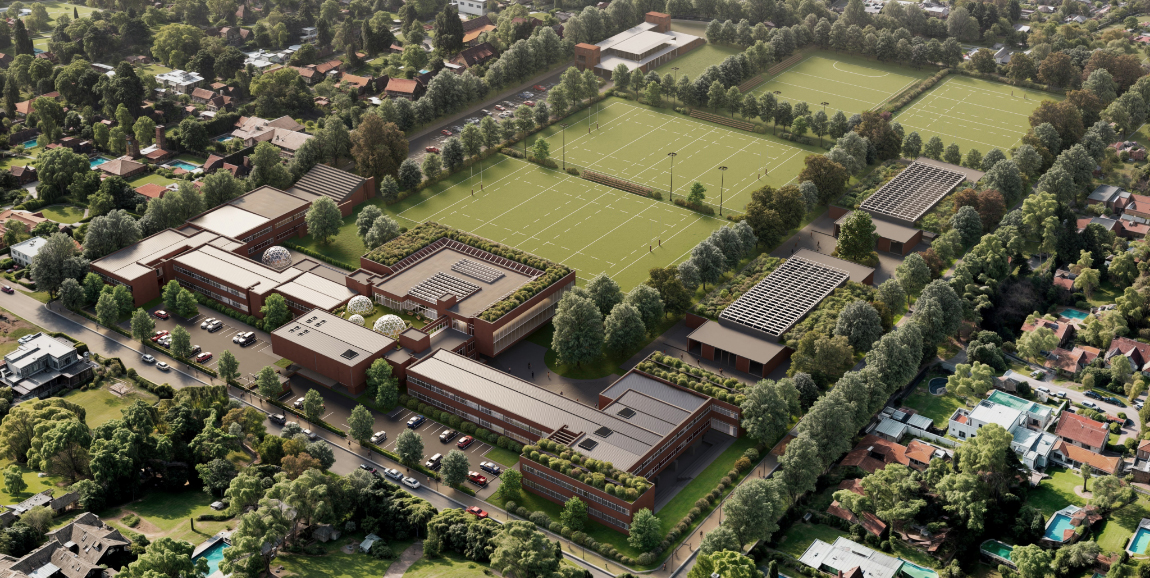
Small-group teaching, project-based learning, and interdisciplinary approaches all require spaces designed to support them. This is no longer incidental — it is essential.
We are convinced that the environment plays a fundamental role in formation. Following John Henry Newman's own understanding, education does not happen only in the classroom — it happens in every corner of the school: in corridors, courtyards, playing fields, and the dining hall.
Our ambition is for every square metre of Newman to be a space for learning, growth, and possibility.
Newman HUB
A Hub for Art, Science and Technology
The most ambitious phase of the Masterplan: a space designed to support project-based learning and a STEAM approach (Science, Technology, Engineering, Arts, Mathematics). A place where pupils learn to solve real problems by creating — collaboratively and inventively.
A decisive step forward
The Art, Science and Technology Hub will be a space designed to bring knowledge together, spark curiosity, and drive active learning to its fullest potential.
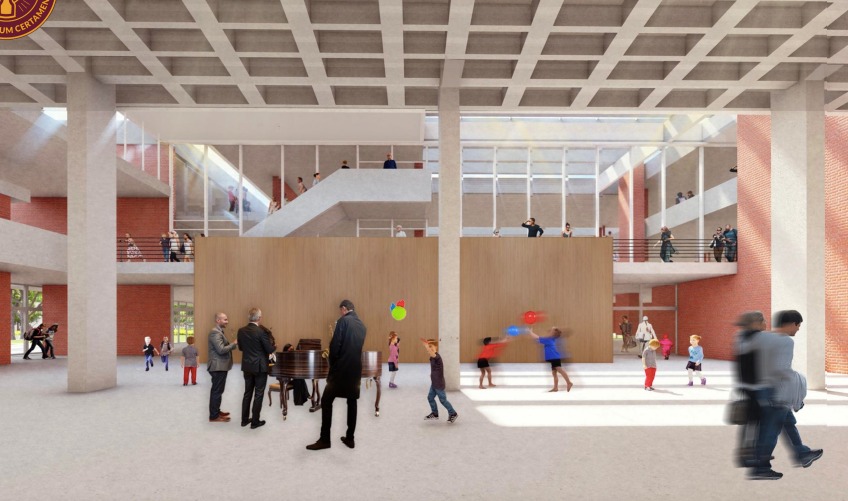
This project makes the most of existing spaces: on one hand, it revitalises the former Brothers' residence at the heart of the school; on the other, it relocates laboratories and workshops, freeing up areas in the Primary and Secondary buildings that can be converted into new classrooms. This phase also includes the refurbishment of the central hall to function as the school's connective core, alongside an expanded dining hall.
As has always been the case at Newman, this project will only be possible through the commitment and generosity of all.
A Hub is an interdisciplinary centre — a focal point where different elements converge to enable communication, the exchange of ideas, and the coordination of resources. Newman Hub will be a flexible space, designed around STEAM principles, comprising laboratories, workshops, and collaborative areas.
Pupils will be able to design, build, programme, experiment, research, create, and solve real-world problems — integrating subjects such as physics, chemistry, biology, robotics, design, computing, music, visual arts, and communications.
It will be a space that dissolves boundaries between disciplines, encourages experimentation and teamwork, and embraces active learning — where logic meets artistic sensibility, theory meets practice, and innovation meets personal expression.
Teacher development is a foundational pillar of this project — it will be teachers who lead and bring to life the day-to-day learning within the Hub.
Newman allocates a portion of its annual budget to the continuing professional development of its staff.
As a member of the Edmund Rice Education Beyond Borders network — comprising more than 280 schools worldwide — we have access to the experiences and best practices of educational hubs in Canada, Australia, and England.
The Educational Innovation Committee is also in dialogue with EDhub in Kentucky (USA), whose approach has informed our thinking for the local context.
- Construction begins: 2025
- Anticipated opening: 2026
- And lessons? Works will be phased across holiday periods and term time, planned so as not to disrupt the normal life of the school.
Masterplan:
what have we achieved so far?
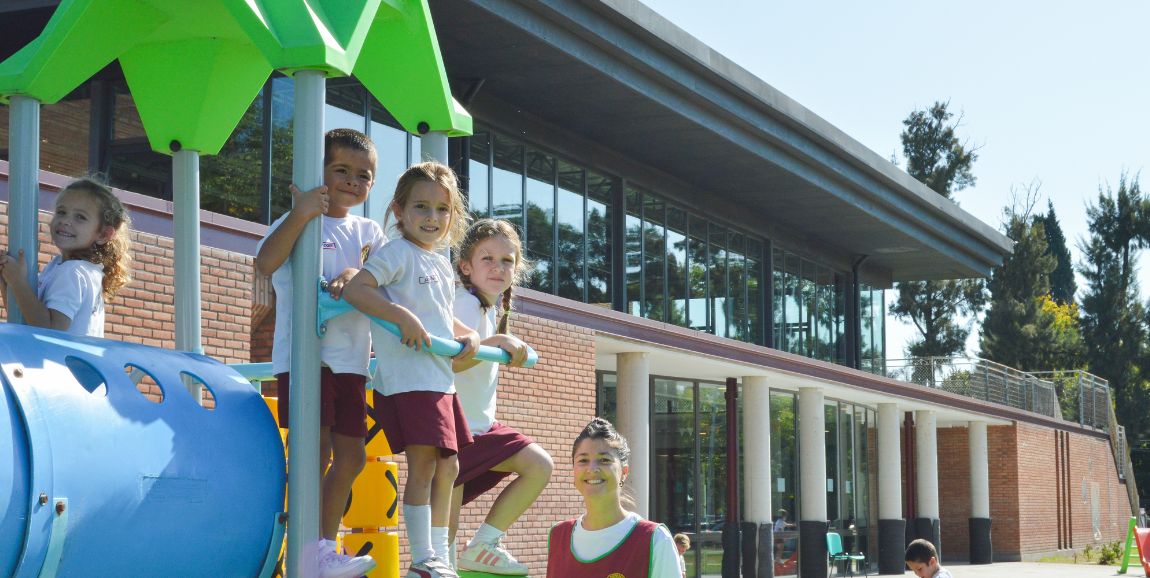
Phase 1. Began in 2021 with the renovation and expansion of Primary classrooms, followed by the construction of the Kinder building and car parks at Blanco Encalada and Warnes. This phase was funded through the Christian Brothers' Institute's own reserves.
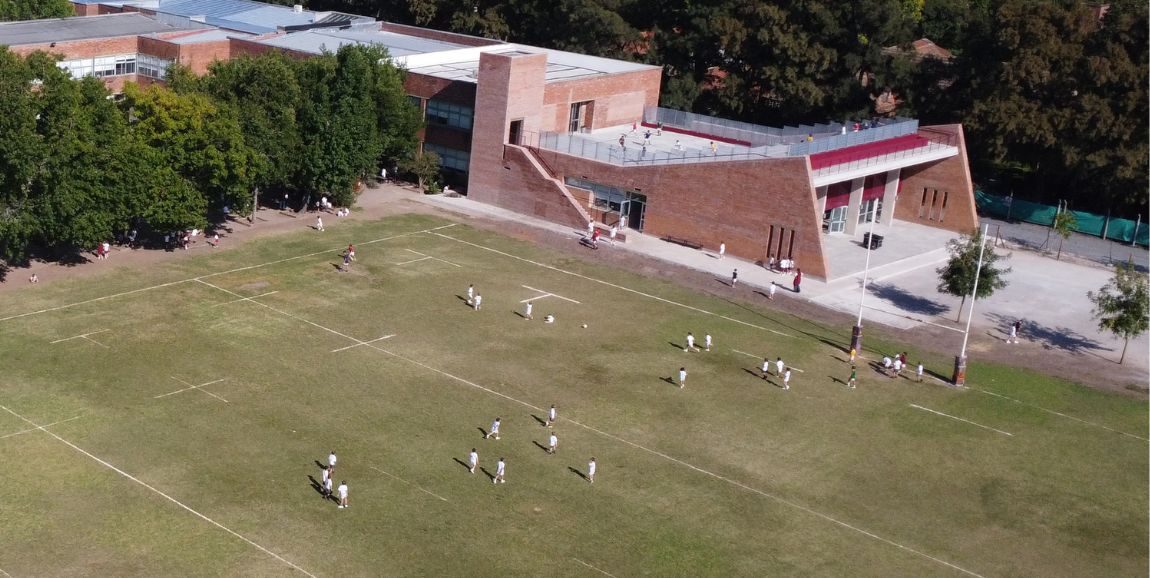
Phase 2. From 2023, improvement works were carried out throughout the building: bathrooms, staffrooms, courtyards, and car parks. The most substantial project was the Primary expansion in 2024 — new classrooms, a multi-use hall, and an amphitheatre courtyard. This phase was funded through a fundraising campaign, with generous contributions from former pupils, current parents, and grandparents.
